 |
DI-Guy SDK Documentation
13.5
|
|
DI-Guy SDK Documentation
13.5
|
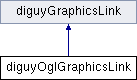
The class diguyOglGraphicsLink is an example of a diguyGraphicsLink subclass for an immediate mode renderer using the DI-Guy Loader. More...
#include <diguyOglGraphicsLink.h>
Public Member Functions | |
| diguyOglGraphicsLink (void *internal_data) | |
| virtual void | begin_character_draw () |
| This function will be called by DI-Guy when the drawing of a new character is beginning. More... | |
| virtual void | end_character_draw () |
| This function will be called by DI-Guy when the drawing traversal of the character's link hierarchy has completed. More... | |
| virtual void | draw () |
| This function will be called by DI-Guy when it is time for the transformations of this link to be applied. More... | |
| virtual void | fill_out_tbo_position_matrix (diguyGraphicsShape *current_shape, float *data_pointer) |
| This function will be called by DI-Guy while building instance groups (which occurs during diguyScenario::draw() or when manually invoked. More... | |
 Public Member Functions inherited from diguyGraphicsLink Public Member Functions inherited from diguyGraphicsLink | |
| const char * | get_name () |
| Returns the name of the link. More... | |
| long | get_uid () |
| All links are assigned a unique identifier, or uid. More... | |
| int | get_index () |
| Returns: index of the link. More... | |
| diguyCharacter * | get_character () |
| Returns a pointer to the diguyCharacter to which this link belongs. More... | |
| int | get_num_shapes () |
| Returns: number of shapes on this link. More... | |
| diguyGraphicsShape * | get_shape_at_index (int index) |
| Returns: pointer of type diguyGraphicsShape; NULL if no shape at the specified index. More... | |
| diguyGraphicsShape * | find_shape (const char *name) |
| This function returns a pointer to the specified shape. More... | |
| diguyGraphicsShape * | find_shape_by_class_type (const char *name) |
| This function returns a pointer to the specified shape. More... | |
| void | set_shape_switch_override (const char *switch_name, int value) |
| This function overrides the motion data driving the visibility child shapes. More... | |
| diguyGraphicsJointType | get_joint_type () |
| Returns the type of joint that attaches this link to its parent. More... | |
| int | get_translation (float *tx, float *ty, float *tz) |
| Returns in the passed variables the translation amount of the link's joint. More... | |
| int | get_translation_double (double *tx, double *ty, double *tz) |
| Returns in the passed variables the translation amount of the link's joint. More... | |
| int | get_translation_is_static () |
| Returns whether the translation returned by get_translation() is static (unchanging) or dynamic (can change frame to frame). More... | |
| int | get_initial_translation (float *tx, float *ty, float *tz) |
| Returns in the passed variables the initial translation amount of the link's joint. More... | |
| const char * | get_var_name_tx () |
| Returns the name of the DI-Guy motion data variable that controls translation along the X axis. More... | |
| const char * | get_var_name_ty () |
| Returns the name of the DI-Guy motion data variable that controls translation along the Y axis. More... | |
| const char * | get_var_name_tz () |
| Returns the name of the DI-Guy motion data variable that controls translation along the Z axis. More... | |
| int | get_rotation (float *rz, float *rx, float *ry) |
| Returns in the passed variables the rotation amount of the link's joint. More... | |
| int | get_rotation_euler (float *rz, float *rx, float *ry) |
| Returns in the passed variables the rotation amount of the link's joint. More... | |
| int | get_rotation_quat (float *qx, float *qy, float *qz, float *qw) |
| Returns in the passed variables the rotation amount of the link's joint. More... | |
| int | get_rotation_is_static () |
| Returns whether the rotation returned by get_rotation() is static (unchanging) or dynamic (can change frame to frame). More... | |
| const char * | get_var_name_rz () |
| Returns the name of the DI-Guy motion data variable that controls rotation about the Z axis. More... | |
| const char * | get_var_name_rx () |
| Returns the name of the DI-Guy motion data variable that controls rotation about the X axis. More... | |
| const char * | get_var_name_ry () |
| Returns the name of the DI-Guy motion data variable that controls rotation about the Y axis. More... | |
| diguyGraphicsLink * | get_parent_link () |
| Returns a pointer to this link's parent link. More... | |
| diguyGraphicsLink * | get_position_link () |
| Returns a pointer to this character's base position link. More... | |
| diguyGraphicsLink * | get_attached_to_link () |
| Returns a pointer to this link's attached to link. More... | |
| int | get_is_position_link () |
| Returns 1 if this link is the position link, or 0 if not. More... | |
| int | get_num_child_links () |
| Returns how many child links this link has. More... | |
| diguyGraphicsLink * | get_child_link_at_index (int index) |
| Returns a pointer to this link's child link at the specified index. More... | |
| int | get_transformation_matrix (float matrix_array[4][4], int transpose=0) |
| This function fills out the passed float array with the world-coordinate system transformation matrix of this link. More... | |
| int | get_transformation_matrix_4x4_ptr (float *matrix, int transpose=0) |
| Pointer version of get_transformation_matrix(), see for docs. More... | |
| int | get_local_transformation_matrix (float matrix_array[4][4], int transpose=0) |
| This function fills out the passed float array with the character-local-coordinate system transformation matrix of this link. More... | |
| int | get_local_transformation_matrix_4x4_ptr (float *matrix, int transpose=0) |
| Pointer version of get_local_transformation_matrix(), see for docs. More... | |
| int | get_local_translation (float *x, float *y, float *z) |
| int | get_link_transformation_matrix (float matrix_array[4][4], int transpose=0) |
| This function fills out the passed float array with the link-local-coordinate system transformation matrix of this link. More... | |
| int | get_link_transformation_matrix_4x4_ptr (float *matrix, int transpose=0) |
| Pointer version of get_link_transformation_matrix(), see for docs. More... | |
| const float * | get_data_ptr () |
| Returns a pointer to the current motion data array. More... | |
| const float * | get_quat_data_ptr () |
| This function is similar to get_data_ptr(), except rotations in the returned array will be in quaternions instead of Euler angles. More... | |
| int | get_translation_data_index () |
| Returns the index of this link's translation data in the float array returned by get_data_ptr() or get_quat_data_ptr(). More... | |
| int | get_rotation_data_index () |
| Returns the index of this link's rotation data in the float array returned by get_data_ptr(). More... | |
| int | get_quat_data_index () |
| Returns the index of this link's rotation data in the float array returned by get_quat_data_ptr(). More... | |
| int | get_unique_color (unsigned char *r, unsigned char *g, unsigned char *b) |
| Returns in the passed pointers the unique color of this link. More... | |
| virtual void | build () |
| This function will be called by DI-Guy when it is time for renderer-specific link objects to be created. More... | |
| virtual void | post_build () |
| This function will be called by DI-Guy when all links and shapes of a DI-Guy character have been built, providing an opportunity for final touch-ups to be made to the built hierarchy. More... | |
| virtual void | unbuild () |
| This function will be called by DI-Guy when it is time for the renderer-specific link objects created during the build() call to be destroyed. More... | |
| virtual void | attach_to_scene () |
| This function will be called by DI-Guy when it is time for renderer-specific link objects created during the build() call to be attached to their attach points. More... | |
| virtual void | detach_from_scene () |
| This function will be called by DI-Guy when it is time for renderer-specific link objects created during the build() call to be detached from their attach points. More... | |
| virtual void | update () |
| This function will be called by DI-Guy when it is time for renderer-specific link objects created during the build() call to be updated with new transformation data. More... | |
| virtual void | set_shader_instance (diguyGraphicsShaderInstance *shader_instance) |
| This function will be called by DI-Guy when it a shader should be bound to this link. More... | |
| virtual void | instancing_state_changed (int instanced) |
| virtual void | fill_out_tbo_additional_data (diguyGraphicsShape *current_shape, float *tbo_data) |
| This function will be called by DI-Guy while building instance groups (which occurs during diguyScenario::draw() or when manually invoked. More... | |
| int | get_inverse_rotation_matrix (float matrix_array[4][4], int transpose=0, int include_translation=1) |
| Gets the inverse of the rotation matrix as a 4x4 float array. More... | |
| int | get_inverse_rotation_matrix_4x4_ptr (float *matrix_array, int transpose=0, int include_translation=1) |
| Gets the inverse of the rotation matrix as a 16-float array pointer. More... | |
| int | get_approximate_bounding_box (float *bbox_min_x, float *bbox_min_y, float *bbox_min_z, float *bbox_max_x, float *bbox_max_y, float *bbox_max_z) |
| Gets an approximation of the bounding box of this bone based on it's position in the skeleton. More... | |
| int | get_is_base_link () |
| Deprecated as of 9.1.4; use diguyGraphicsLink::get_is_position_link() instead. More... | |
| int | get_scale (float *sz, float *sx, float *sy) |
| Deprecated as of 12.0.0 due to architecture change. More... | |
| int | get_scale_is_static () |
| Returns whether the scale returned by get_scale() is static (unchanging) or dynamic (can change frame to frame). More... | |
| const char * | get_var_name_sx () |
| Returns the name of the DI-Guy motion data variable that controls scale in the Z dimension. More... | |
| const char * | get_var_name_sy () |
| Returns the name of the DI-Guy motion data variable that controls scale in the Y dimension. More... | |
| const char * | get_var_name_sz () |
| Returns the name of the DI-Guy motion data variable that controls scale in the X dimension. More... | |
| int | get_scale_data_index () |
| Returns the index of this link's scale data in the float array returned by get_data_ptr() or get_quat_data_ptr(). More... | |
| bdiLink * | get_scripted_object () |
Static Public Attributes | |
| static int | sm_links_drawn = 0 |
| static int | sm_num_chars_drawn = 0 |
Additional Inherited Members | |
| Protected Member Functions inherited from diguyGraphicsLink | |
| diguyGraphicsLink (void *internal_data) | |
| A protected constructor. More... | |
| virtual | ~diguyGraphicsLink () |
| A protected destructor. More... | |
The class diguyOglGraphicsLink is an example of a diguyGraphicsLink subclass for an immediate mode renderer using the DI-Guy Loader.
DI-Guy 'links' are essentially the same as 'bones' in other APIs.
There are two primary purposes of links:
The example subclass shows how to use the accessors of the diguyGraphicsLink class and which virtual functions should be overridden for an immediate mode renderer such as OpenGL.
| diguyOglGraphicsLink::diguyOglGraphicsLink | ( | void * | internal_data | ) |
|
virtual |
This function will be called by DI-Guy when the drawing of a new character is beginning.
This happens when the position link is drawn.
Immediate Mode:
Immediate mode renderers can override this function. Typically some type of transformation matrix stack push operation is performed. This is also an appropriate place to do any per-character modifications, such as:
Scene Graph:
Scene graph renderers usually do not override this function; transformation states are handled automatically by scene graphs.
Callable From:
Reimplemented from diguyGraphicsLink.
|
virtual |
This function will be called by DI-Guy when the drawing traversal of the character's link hierarchy has completed.
Immediate Mode:
Immediate mode renderers can override this function. Typically any matrix stack push operation done in begin_character_draw() is undone here by an appropriate pop operation.
Scene Graph:
Scene graph renderers usually do not override this function; transformation states are handled automatically by scene graphs.
Callable From:
Reimplemented from diguyGraphicsLink.
|
virtual |
This function will be called by DI-Guy when it is time for the transformations of this link to be applied.
Immediate Mode:
Immediate mode renderers usually do override this function, to apply transformations to the transformation stack.
Scene Graph:
Scene graph renderers usually do not override this function; transformation states are handled automatically by scene graphs.
Callable From:
Reimplemented from diguyGraphicsLink.
|
virtual |
This function will be called by DI-Guy while building instance groups (which occurs during diguyScenario::draw() or when manually invoked.
It gives the user a chance to set the contents of the tbo on a per shape basis. tbo_data should be a 4x3 matrix. Will only be called if diguyScenario::set_instancing_position_callback_enabled() is set to true.
Reimplemented from diguyGraphicsLink.
|
static |
|
static |
 1.8.9.1
