 |
VR-Forces 5.0.1 Developer's Guide
|


All Classes Namespaces Files Functions Variables Typedefs Enumerations Enumerator Properties Friends Macros Groups Pages
|
VR-Forces 5.0.1 Developer's Guide
|
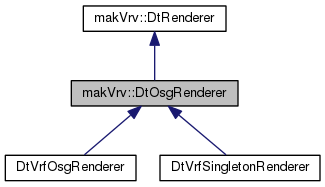
The DtOsgRenderer is the component responsible for rendering 3D images onto the screen via OpenSceneGraph The component responsible for drawing 3D images onto a screen is the DtRenderer. Each display engine owns one. The DtRenderer provides an interface for updating the scene graph and rendering the scene. Its update() and render() functions are called each display engine tick.
The core VR-Vantage Toolkit framework abstracts away from the underlying rendering implementation. This separation ensures that the rendering-independent code remains independent of OSG, while the rendering code exists in the libraries that depend on OSG. (VR-Vantage can support alternate rendering solutions.) The DtOsgRenderer is the OSG implementation of the DtRenderer and draws 3D images via OpenSceneGraph.
Public Member Functions | |
| virtual | ~DtOsgRenderer () |
| virtual void | cleanup () override |
| virtual void | update () |
| virtual void | render () |
| virtual bool | viewExists () const |
| virtual void | resetSceneGraph () |
| virtual void | removeChannelRoot (DtChannel *channel) |
| virtual bool | isSceneRootEmpty (const DtSceneRoot &sr) |
| virtual void | addNodeToRoot (osg::Node *node, const DtSceneRoot &sr, bool createOnAccess=true) |
| virtual void | addSceneRootToRoot (const DtSceneRoot &childRoot, const DtSceneRoot &parentRoot, bool createOnAccess=true) |
| virtual void | removeNodeFromRoot (osg::Node *node, const DtSceneRoot &sr) |
| virtual void | removeSceneRootFromRoot (const DtSceneRoot &childRoot, const DtSceneRoot &parentRoot) |
| virtual void | traverseRoot (osg::NodeVisitor &nv, const DtSceneRoot &sr) |
| virtual void | setSceneRootNodeMask (const DtSceneRoot &sr, osg::Node::NodeMask nodemask) |
| virtual osg::Node::NodeMask | sceneRootNodeMask (const DtSceneRoot &sr) |
| virtual osg::BoundingSphere | sceneRootBound (const DtSceneRoot &sr) |
| virtual osg::BoundingSphere | sceneRootListBound (const DtSceneRootList &srList) |
| virtual void | addChannelToModelSetRoot (int modelSetId, DtChannel *channel) |
| virtual void | removeChannelFromModelSetRoot (int modelSetId, DtChannel *channel) |
| virtual void | addChannelToVisualizerRoot (int modelSetId, int visualizerType, DtChannel *channel) |
| virtual void | removeChannelFromVisualizerRoot (int modelSetId, int visualizerType, DtChannel *channel) |
| virtual void | setSceneDataToRenderRoot (osgViewer::View &view) |
| virtual void | addSceneToCamera (osg::Camera *camera) |
| virtual void | addSceneRootToNode (const DtSceneRoot &sr, osg::Group *node, bool createOnAccess=true) |
| virtual osg::Group * | findSceneRootChildByName (const DtSceneRoot &parent, const std::string &rootName) |
| virtual bool | matchesSceneRoot (const DtSceneRoot &sr, osg::Group *group) |
| virtual void | releaseResources () |
| virtual void | releaseResources (osg::State *state) |
| void | setRootNode (osg::Group *, bool copyChildrenFromOldRoot) |
| void | resetRoot () |
| void | registerPagedLODs (osg::Node *node) |
| void | clearPagedLODs () |
| virtual void | setWireframeRendering (bool enabled) |
| virtual void | setDdsFlip (bool flip) |
| virtual bool | wireframeRendering () const |
| virtual void | setShadowState (bool enabled) |
| virtual bool | shadowsEnabled () const |
| virtual bool | multiViewVrEnabled () const |
| virtual void | setMultiViewVrEnabled (bool enabled) |
| virtual DtMultiViewData & | getOrCreateMultiViewData (const osg::Camera *camera) |
| void | clearMultiViewData () |
| void | setTerrainScalingEnabled (bool enabled) |
| void | setTerrainScaleFactor (double scaleFactor) |
| virtual bool | makeContextCurrent () |
| DtFontManager & | fontManager () |
| const DtFontManager & | fontManager () const |
| DtEffectManager & | effectManager () |
| const DtEffectManager & | effectManager () const |
| virtual void | debugDrawBox (const osg::Vec3 ¢er, const osg::Vec3 &extents) |
| virtual void | debugDrawBox (const osg::Vec3 ¢er, const osg::Vec3 &extents, const osg::Quat &orientation) |
| virtual void | setChannelShadowState (DtOsgChannel *osgChannel, bool enable) |
| virtual bool | channelShadowSettings (DtOsgChannel *osgChannel, DtShadowSettingsObject **shadowSettingObject, bool *isPlanView) const |
| virtual bool | channelCloudShadowMap (DtOsgChannel *osgChannel, unsigned int *textureIndex, osg::Matrix *textureViewProjMatrix, unsigned int *textureIndex2, osg::Matrix *textureViewProjMatrix2) const |
| virtual bool | cameraCloudShadowMap (osg::Camera *camera, unsigned int *textureIndex, osg::Matrix *textureViewProjMatrix, unsigned int *textureIndex2, osg::Matrix *textureViewProjMatrix2) const |
| osg::StateSet * | sgRenderRootStateSet () |
| void | clearStateGraphForAllChannels (void) |
| virtual void | addMainThreadPersistantJob (osg::Operation *opp) |
| virtual void | removeMainThreadPersistantJob (osg::Operation *opp) |
| virtual void | addMainThreadPreDrawJob (osg::Operation *opp) |
| virtual void | addParallelThreadCullJob (osg::Operation *opp) |
| virtual void | removeParallelThreadCullJob (osg::Operation *opp) |
| virtual void | addParallelThreadSwapBufferJob (osg::Operation *opp) |
| virtual bool | addMainThreadTransientJob (osg::Operation *operation, bool requiredThisFrame) |
| virtual void | launchPreCullTasks (DtOsgCullVisitor *cv) |
| virtual void | launchSwapBufferTasks () |
| virtual DtMainThreadJobsManager * | createJobsManager () |
| virtual int | alphaToCoverageRenderBin () |
| virtual void | setNewProfilerState (int value) |
| virtual int | newProfilerState () |
 Public Member Functions inherited from makVrv::DtRenderer Public Member Functions inherited from makVrv::DtRenderer | |
| DtRenderer (DtDe &de) | |
| virtual | ~DtRenderer () |
| virtual void | postUpdate () |
| DtObserverObjectManager * | observerObjectManager () |
| DtTickableManagerInterface & | tickableManager () |
| const DtTickableManagerInterface & | tickableManager () const |
| DtOverlayManager & | overlayManager () |
| const DtOverlayManager & | overlayManager () const |
| void | createManagers () |
| const DtRenderMap & | renderMap () const |
Static Public Member Functions | |
| static DtOsgRenderer * | findInstance (DtDe &de) |
Public Attributes | |
| boost::signalslib::signal < void(int modelSet, int visualType) > | signal_visualizerRootAdded |
| boost::signalslib::signal < void(DtChannel *) > | signal_channelRootAdded |
| boost::signalslib::signal < void(bool active) > | signal_treeProfilingChanged |
| boost::signalslib::signal < void(bool active) > | signal_diguyProfilingChanged |
| boost::signalslib::signal< void() > | signal_shadowsRemoved |
| Public Attributes inherited from makVrv::DtRenderer | |
| boost::signalslib::signal < void(double simTime)> | signal_update |
| boost::signalslib::signal < void(double simTime)> | signal_preObserverUpdate |
| boost::signalslib::signal < void(double simTime)> | signal_postUpdate |
| boost::signalslib::signal< void()> | signal_releaseResources |
Static Public Attributes | |
| static const int | SKY_RENDERBIN = -10 |
| static const int | DEFAULT_RENDERBIN = 0 |
| static const int | DEPTH_ONLY_RENDERBIN = 5 |
| static const int | OCEAN_RENDERBIN = 6 |
| static const int | LIGHTPOINT_RENDERBIN = 7 |
| static const int | CLOUD_RENDERBIN = 8 |
| static const int | OCCLUSION_RENDERBIN = 9 |
| static const int | DEFAULT_TRANSPARENT_RENDERBIN = 10 |
| static const int | COCKPIT_RENDERBIN = 25 |
| static const std::string | AlphaToCoverageBin |
| static const std::string | SkyBin |
| static const std::string | DepthOnlyBin |
| static const std::string | OceanBin |
| static const std::string | LightPointBin |
| static const std::string | CloudBin |
| static const std::string | OcclusionRenderBin |
| static const std::string | CockpitBin |
Friends | |
| class | DtSceneGraph |
| class | DtOsgRendererCreator |
| class | DtSceneGraphTreeLogic |
Additional Inherited Members | |
| Public Types inherited from makVrv::DtRenderer | |
| typedef boost::unordered_map < DtElementID, double > | DtRenderMap |
| Protected Attributes inherited from makVrv::DtRenderer | |
| DtDe & | myDe |
| DtObserverObjectManager * | myObserverObjectManager |
| DtTickableManagerInterface * | myTickableManager |
| DtOverlayManager * | myOverlayManager |
| DtRenderMap | myRenderMap |
| DtSignalConnectionManager | myConnections |
|
protected |
Under each model set group is another channel group for each visualizer type. So we have a map of visualizer type groups, one per model set.
|
protected |
Under each model set group is another channel group for each visualizer type. So we have a map of visualizer type groups, one per model set.
|
protected |
Under each model set group is another channel group for each visualizer type. So we have a map of visualizer type groups, one per model set.
|
protected |
Under each model set group is another channel group for each visualizer type. So we have a map of visualizer type groups, one per model set.
|
protected |
Under each model set group is another channel group for each visualizer type. So we have a map of visualizer type groups, one per model set.
|
protected |
Under each model set group is another channel group for each visualizer type. So we have a map of visualizer type groups, one per model set.
|
protected |
Under each model set group is another channel group for each visualizer type. So we have a map of visualizer type groups, one per model set.
|
protected |
DtChannelSpecificGroup that contains only the channel it represents. This will allow for osg nodes to be parented on a channel basis under each model set. As an observer changes which model set it is viewing on the channel, the channel will be removed fom the channel specific group, however, the root itself will stay. The only time the root is removed is when the channel itself is destroyed.
|
protected |
Under each model set group is another channel group for each visualizer type. So we have a map of visualizer type groups, one per model set.
|
protected |
Under each model set group is another channel group for each visualizer type. So we have a map of visualizer type groups, one per model set.
|
virtual |
DTOR.
|
protected |
CTOR
This is protected, use the creator instead.
|
static |
Attempt to get the Osg renderer for the de. If the de is not initialized or the Renderer is of a different type the returned pointer will be null.
| 0 | If the de does not have an OSG renderer. |
|
overridevirtual |
called by the DtDe before things are destroyed in order to stop the pager before stuff starts getting deleted.
Implements makVrv::DtRenderer.
|
virtual |
Add functionality to update, update dynamic objects.
Reimplemented from makVrv::DtRenderer.
|
virtual |
Render.
Implements makVrv::DtRenderer.
|
virtual |
Returns whether or not a view (typically a window) exists.
|
virtual |
Removes all nodes from the scene graph.
Implements makVrv::DtRenderer.
|
virtual |
Checks to see if this channel has a root, and, if it does, remove it from all model set roots. This will typically happen when a channel is destroyed.
|
virtual |
Checks to see if the specified sceneRoot currently has any children. Note that: in some cases, this may cause a scene root to be created if it doesn't exist A scene root that doesn't exist (and doesn't get created) is considered 'empty' by this method.
|
virtual |
Add a node to the specified SceneRoot.
|
virtual |
Add a (child) SceneRoot to the specified SceneRoot.
|
virtual |
Remove a node from the specified SceneRoot.
|
virtual |
Remove a (child) SceneRoot from the specified SceneRoot. No-op if childRoot is not a child of parentRoot.
|
virtual |
Traverse from the specified SceneRoot with the given visitor.
|
virtual |
Set the nodemask of a SceneRoot.
|
virtual |
Get the nodemask of a SceneRoot.
|
virtual |
Get the bounding sphere of sceneRoot.
|
virtual |
Get the bounding sphere of list of sceneRoots.
|
virtual |
Set the specified channel to render a modelSet root.
|
virtual |
Stop the specified channel from rendering a modelSet root.
|
virtual |
Set the specified channel to render a visualizer type root.
|
virtual |
Stop the specified channel from rendering a visualizer type root.
|
virtual |
Set the sceneData of a view to the top of the scene graph.
|
virtual |
Add the scene to the specified camera.
|
virtual |
Add the specified SceneRoot to an OSG group node.
This should be used with caution - it creates a dependency between the caller and the scene graph's internal node structure.
|
virtual |
Look up a root by name in the parent specified by SceneRoot. This should not be used to access roots that are created by Vantage. It Is provided for plugins to find the roots possibly created by other plugins (such as multiple GlStudio plugins, for example)
|
virtual |
Does this group match the given scene root.
|
inlinevirtual |
Release all openGL objects in the scene graph.
Implements makVrv::DtRenderer.
|
virtual |
Release all openGL objects in the scene graph.
| void makVrv::DtOsgRenderer::setRootNode | ( | osg::Group * | , |
| bool | copyChildrenFromOldRoot | ||
| ) |
Set the new scene root node, and optionally copy the old root children.
| void makVrv::DtOsgRenderer::resetRoot | ( | ) |
Reset the scene root node back to the original node.
| void makVrv::DtOsgRenderer::registerPagedLODs | ( | osg::Node * | node | ) |
Register any paged LOD's with all of the existing database pagers.
| void makVrv::DtOsgRenderer::clearPagedLODs | ( | ) |
Register any paged LOD's with all of the existing database pagers.
|
virtual |
Turn on/off wireframe mode rendering.
Implements makVrv::DtRenderer.
|
virtual |
Turn on/off dds flip.
|
virtual |
Check wireframe status.
Implements makVrv::DtRenderer.
|
virtual |
Set the global shadow mode.
Implements makVrv::DtRenderer.
|
virtual |
Get global shadow mode.
Implements makVrv::DtRenderer.
|
virtual |
|
virtual |
|
virtual |
| void makVrv::DtOsgRenderer::clearMultiViewData | ( | ) |
| void makVrv::DtOsgRenderer::setTerrainScalingEnabled | ( | bool | enabled | ) |
Set whether terrain scaling is on.
| void makVrv::DtOsgRenderer::setTerrainScaleFactor | ( | double | scaleFactor | ) |
Set the terrain scale factor (only used if scaling is on)
|
virtual |
Attempt to make a context current.
Implements makVrv::DtRenderer.
| DtFontManager& makVrv::DtOsgRenderer::fontManager | ( | ) |
Get the font manager.
| const DtFontManager& makVrv::DtOsgRenderer::fontManager | ( | ) | const |
| DtEffectManager& makVrv::DtOsgRenderer::effectManager | ( | ) |
Get the font manager.
| const DtEffectManager& makVrv::DtOsgRenderer::effectManager | ( | ) | const |
|
virtual |
Draw a box in the next frame.
|
virtual |
Draw a box in the next frame.
|
virtual |
Set the shadow mode for channels.
|
virtual |
Gets the shadow settings for this channel.
|
virtual |
Gets the cloud shadow map for this channel.
|
virtual |
Gets the cloud shadow map for this camera.
| osg::StateSet* makVrv::DtOsgRenderer::sgRenderRootStateSet | ( | ) |
Gets the stateset for the main render group root node.
| void makVrv::DtOsgRenderer::clearStateGraphForAllChannels | ( | void | ) |
osg maintains an internal cache of StateSets in a StateGraph
|
virtual |
add an operation that will run every frame in the main thread while the cull thread is happening.
|
virtual |
removes an operation that will run in the main thread while the cull thread is happening.
|
virtual |
adds an operation that will run before rendering occurs.
|
virtual |
adds an operation that will run before rendering occurs.
|
virtual |
remove a parallel thread cull job from the list
|
virtual |
adds an operation that will run while swap buffers happen .
|
virtual |
adds a jobs for doing work during cull see DtMainThreadJobManager
|
virtual |
runs precull jobs, run by DtOsgCullVistorCallback
|
virtual |
run tasks in parallel to swap buffers and main thread job
Implements makVrv::DtRenderer.
|
virtual |
creates the job manager can be overloaded
|
virtual |
get the render bin number being used for the alpha to coverage bin.
|
virtual |
used for turning on and off tracy at the top level to avoid problems
Implements makVrv::DtRenderer.
|
virtual |
used for turning on and off tracy at the top level to avoid problems
Implements makVrv::DtRenderer.
|
static |
Under each model set group is another channel group for each visualizer type. So we have a map of visualizer type groups, one per model set.
|
static |
Under each model set group is another channel group for each visualizer type. So we have a map of visualizer type groups, one per model set.
|
static |
Under each model set group is another channel group for each visualizer type. So we have a map of visualizer type groups, one per model set.
|
static |
Under each model set group is another channel group for each visualizer type. So we have a map of visualizer type groups, one per model set.
|
static |
Under each model set group is another channel group for each visualizer type. So we have a map of visualizer type groups, one per model set.
|
static |
Under each model set group is another channel group for each visualizer type. So we have a map of visualizer type groups, one per model set.
|
static |
Under each model set group is another channel group for each visualizer type. So we have a map of visualizer type groups, one per model set.
|
static |
Under each model set group is another channel group for each visualizer type. So we have a map of visualizer type groups, one per model set.
|
inlinestatic |
Under each model set group is another channel group for each visualizer type. So we have a map of visualizer type groups, one per model set.
References makVrv::DtSceneRoot::IntersectOnlyModelSetSpecific.
|
static |
Under each model set group is another channel group for each visualizer type. So we have a map of visualizer type groups, one per model set.
|
inlinestatic |
Under each model set group is another channel group for each visualizer type. So we have a map of visualizer type groups, one per model set.
|
inlinestatic |
Under each model set group is another channel group for each visualizer type. So we have a map of visualizer type groups, one per model set.
|
inlinestatic |
Under each model set group is another channel group for each visualizer type. So we have a map of visualizer type groups, one per model set.
|
inlinestatic |
Under each model set group is another channel group for each visualizer type. So we have a map of visualizer type groups, one per model set.
| osg::Group* makVrv::DtOsgRenderer::sgRenderRoot | ( | ) |
Get the scene graph render root. This node will not change and should only be accessed when connecting a window to it.
| osg::Group* makVrv::DtOsgRenderer::sgEnvironmentRoot | ( | ) |
Get the environment root which controls the scene's lighting and other
! global state.
| osg::Group* makVrv::DtOsgRenderer::sgPropsRoot | ( | ) |
Get the props root node.
| osg::Group* makVrv::DtOsgRenderer::sgIntersectoOnlyPropsRoot | ( | ) |
Get the intersect only props root (child of sgPropsRoot)
| osg::Group* makVrv::DtOsgRenderer::sgTerrainRoot | ( | ) |
Get the terrains root node.
| osg::Group* makVrv::DtOsgRenderer::sgScaledTerrainRoot | ( | ) |
Get the active terrain root when terrain scaling is on.
| osg::Group* makVrv::DtOsgRenderer::sgScaledPropsRoot | ( | ) |
Get the active props root when terrain scaling is on.
| osg::Group* makVrv::DtOsgRenderer::sgMinimapTerrainRoot | ( | ) |
Get the minimap terrains root node.
| osg::Group* makVrv::DtOsgRenderer::sgMinimapFallbackTerrainRoot | ( | bool | createOnAccess | ) |
Get the minimap fallback terrain root node.
| osg::Group* makVrv::DtOsgRenderer::sgNormalizedOverlayRoot | ( | ) |
Get the debug graphics root node.
| osg::Group* makVrv::DtOsgRenderer::sgStatic3dDebugRoot | ( | ) |
Get the debug graphics root node.
| osg::Group* makVrv::DtOsgRenderer::sgOceanRoot | ( | ) |
Get the ocean root node.
|
virtual |
Get ShadowRoot Group for the modelSet.
|
virtual |
Get ShadowScene for the modelSet.
| osg::Group* makVrv::DtOsgRenderer::sgIntersectOnlyRoot | ( | int | modelSet | ) |
get the intersect only root. Used by the indirect system for intersections.
|
virtual |
Returns the current OSG viewer.
Generally this is a DefaultViewer before the display is initialized, and a composite viewer afterwards
|
virtual |
Under each model set group is another channel group for each visualizer type. So we have a map of visualizer type groups, one per model set.
|
virtual |
access to the loader stats. lazy created parent imgui helper if needed
|
virtual |
access the helper
| const DtMainThreadJobsManager* makVrv::DtOsgRenderer::mainThreadJobsManager | ( | ) | const |
access to the main thread jobs manager.
|
virtual |
brief imgui loader stats currently added to loader perf page toplevel int stat
|
virtual |
brief imgui loader stats currently added to loader perf page subcatagory float stat
|
virtual |
brief imgui loader stats currently added to loader perf page toplevel int stat
|
virtual |
brief imgui loader stats currently added to loader perf page subcatagory float stat
gets the number of reported active threads from the file cache and the pagers.
| void makVrv::DtOsgRenderer::advanceTime | ( | ) |
Advance time, slave calls it DtOsgRenderer::update(), master calls it from DtOsgKeyAndMouseEventListener.
|
static |
Access the texture listener/tracker For now, this is only so that imgui can access it and display the stats.
|
protectedvirtual |
Move a target root out of its model set root and into the shadow root.
|
protected |
Get the root for a given modelSet. Nodes aren't put directly under here (except the model set-specific visualizer type nodes) but channels subscribe and unsubscribe to these.
Returns a DtChannelSpecificGroup or an osg::Group
|
protected |
Get the root for visual models of a specific type in a specific model set If the root does not exist and createOnAccess is true, it will be created and returned; otherwise, returns 0.
Returns a DtChannelSpecificGroup or an osg::Group
|
protected |
Get the root for the given channel. Nodes are put directly under this root. If root does not exist and createOnAccess is true will create, else return 0.
Returns a DtChannelSpecificGroup or an osg::Group
|
protected |
When a window is created, the fill out its myOsgWindowManager pointer.
|
protected |
When a window is about to be destroyed, check if its the last window and if so, null out the myOsgWindowManager pointer.
|
protected |
receive signals from the shared state about wireframe mode
|
protected |
receive signals from the shared state about dds flip mode
|
protected |
receive signals from the shared state about occlusion culling state
|
protected |
receive signals from the shared state abotu the shadow state
|
protected |
receive signals from the shared state about the terrain scaling state
|
protected |
receive signals from the shared state about the terrain scale factor
|
protected |
receive signals from the shared state about coordinate system changes
|
protected |
Under each model set group is another channel group for each visualizer type. So we have a map of visualizer type groups, one per model set.
|
protected |
This method checks for windows that exist but have no channels. It clears them each frame so that they don't have garbage on them.
|
protected |
This method calls clearFrameBufferIfChanged on all the channels. This clears the buffer if the channel changed in some way that it needs to clean up the area of the framebuffer it is no longer using. Examples are if the viewport changed or HDR is toggled.
|
protectedvirtual |
removes the shadows from the tree and restores any children to the scene root
|
protectedvirtual |
creates a shadowed scene and adds it to the scene root
|
protectedvirtual |
Saves terrain geometry and props to specified file. This file will be saved in the format specified by the file extension. Currently only the .gdb extension is supported.
Implements makVrv::DtRenderer.
|
protectedvirtual |
Under each model set group is another channel group for each visualizer type. So we have a map of visualizer type groups, one per model set.
|
protectedvirtual |
Under each model set group is another channel group for each visualizer type. So we have a map of visualizer type groups, one per model set.
|
protectedvirtual |
Create a root that is associated with the channel.
|
protectedvirtual |
Create a ShadowRoot and ShadowScene for the model set.
|
protectedvirtual |
Under each model set group is another channel group for each visualizer type. So we have a map of visualizer type groups, one per model set.
|
protectedvirtual |
Under each model set group is another channel group for each visualizer type. So we have a map of visualizer type groups, one per model set.
|
protectedvirtual |
Under each model set group is another channel group for each visualizer type. So we have a map of visualizer type groups, one per model set.
|
protected |
Under each model set group is another channel group for each visualizer type. So we have a map of visualizer type groups, one per model set.
|
protected |
Used to connect to the instance manager signal that provides the render set.
|
protected |
Used to setup the dither shader for the alpha to coverage bin.
|
protectedvirtual |
moves asynchronously loaded compile sets to the ICO
|
protectedvirtual |
initialize texture object management if necessary
|
protectedvirtual |
run the main thead job and ico for as long as specified, runs at the end of rendering if there is remainging time this can only be run if there is only one context or the osg graphics context and the opengl graphics context are in sync.
Implements makVrv::DtRenderer.
|
protectedvirtual |
Get the current number of database pagers a composite viewer has. Note that the viewer may have multiple views, and not all have to have a pager. This returns the number found for the first view with a pager.
|
protectedvirtual |
Check if Nahimic service is running and warn to shut it down since it can cause long swap buffer times.
|
friend |
|
friend |
|
friend |
|
static |
|
static |
|
static |
|
static |
|
static |
|
static |
|
static |
|
static |
|
static |
|
static |
|
static |
|
static |
|
static |
|
static |
|
static |
|
static |
|
static |
| boost::signalslib::signal< void(int modelSet, int visualType) > makVrv::DtOsgRenderer::signal_visualizerRootAdded |
| boost::signalslib::signal< void(DtChannel*) > makVrv::DtOsgRenderer::signal_channelRootAdded |
| boost::signalslib::signal< void(bool active) > makVrv::DtOsgRenderer::signal_treeProfilingChanged |
| boost::signalslib::signal< void(bool active) > makVrv::DtOsgRenderer::signal_diguyProfilingChanged |
| boost::signalslib::signal< void() > makVrv::DtOsgRenderer::signal_shadowsRemoved |
|
protected |
Under each model set group is another channel group for each visualizer type. So we have a map of visualizer type groups, one per model set.
|
protected |
Under each model set group is another channel group for each visualizer type. So we have a map of visualizer type groups, one per model set.
|
protected |
Under each model set group is another channel group for each visualizer type. So we have a map of visualizer type groups, one per model set.
|
protected |
Under each model set group is another channel group for each visualizer type. So we have a map of visualizer type groups, one per model set.
|
protected |
This viewer exists so that when there are no displays, windows, or channels, the scene can be updated and kept current. This way when a display, window, channel is created, the objects in the scene graph are current and will match other IG instances. It only gets updated when there myOsgWindowManager is null. It also never renders.
|
protected |
Under each model set group is another channel group for each visualizer type. So we have a map of visualizer type groups, one per model set.
|
protected |
Group for drawing debug graphics, cleared after each frame.
|
protected |
Group for drawing debug graphics left alone each frame.
|
protected |
Group for drawing debug graphics left alone each frame.
|
protected |
Shared geometry for debug boxes.
|
protected |
Under each model set group is another channel group for each visualizer type. So we have a map of visualizer type groups, one per model set.
|
protected |
Under each model set group is another channel group for each visualizer type. So we have a map of visualizer type groups, one per model set.
|
protected |
Under each model set group is another channel group for each visualizer type. So we have a map of visualizer type groups, one per model set.
|
protected |
Under each model set group is another channel group for each visualizer type. So we have a map of visualizer type groups, one per model set.
|
protected |
Under each model set group is another channel group for each visualizer type. So we have a map of visualizer type groups, one per model set.
|
protected |
Under each model set group is another channel group for each visualizer type. So we have a map of visualizer type groups, one per model set.
|
protected |
Under each model set group is another channel group for each visualizer type. So we have a map of visualizer type groups, one per model set.
|
protected |
Under each model set group is another channel group for each visualizer type. So we have a map of visualizer type groups, one per model set.
|
protected |
Under each model set group is another channel group for each visualizer type. So we have a map of visualizer type groups, one per model set.
|
protected |
Under each model set group is another channel group for each visualizer type. So we have a map of visualizer type groups, one per model set.
|
protected |
Under each model set group is another channel group for each visualizer type. So we have a map of visualizer type groups, one per model set.
|
protected |
Under each model set group is another channel group for each visualizer type. So we have a map of visualizer type groups, one per model set.
|
protected |
Under each model set group is another channel group for each visualizer type. So we have a map of visualizer type groups, one per model set.
|
protected |
Under each model set group is another channel group for each visualizer type. So we have a map of visualizer type groups, one per model set.
|
protected |
Under each model set group is another channel group for each visualizer type. So we have a map of visualizer type groups, one per model set.
|
protected |
Under each model set group is another channel group for each visualizer type. So we have a map of visualizer type groups, one per model set.
|
protected |
Under each model set group is another channel group for each visualizer type. So we have a map of visualizer type groups, one per model set.
|
protected |
Under each model set group is another channel group for each visualizer type. So we have a map of visualizer type groups, one per model set.
|
protected |
Under each model set group is another channel group for each visualizer type. So we have a map of visualizer type groups, one per model set.
|
protected |
Under each model set group is another channel group for each visualizer type. So we have a map of visualizer type groups, one per model set.
|
protected |
Under each model set group is another channel group for each visualizer type. So we have a map of visualizer type groups, one per model set.
|
protected |
Under each model set group is another channel group for each visualizer type. So we have a map of visualizer type groups, one per model set.
|
protected |
Under each model set group is another channel group for each visualizer type. So we have a map of visualizer type groups, one per model set.
|
protected |
Under each model set group is another channel group for each visualizer type. So we have a map of visualizer type groups, one per model set.
|
protected |
Under each model set group is another channel group for each visualizer type. So we have a map of visualizer type groups, one per model set.
|
protected |
Under each model set group is another channel group for each visualizer type. So we have a map of visualizer type groups, one per model set.
|
protected |
Under each model set group is another channel group for each visualizer type. So we have a map of visualizer type groups, one per model set.
|
protected |
Under each model set group is another channel group for each visualizer type. So we have a map of visualizer type groups, one per model set.
|
protected |
Under each model set group is another channel group for each visualizer type. So we have a map of visualizer type groups, one per model set.
|
protected |
Under each model set group is another channel group for each visualizer type. So we have a map of visualizer type groups, one per model set.
|
protected |
Under each model set group is another channel group for each visualizer type. So we have a map of visualizer type groups, one per model set.
|
protected |
Under each model set group is another channel group for each visualizer type. So we have a map of visualizer type groups, one per model set.
|
protected |
Under each model set group is another channel group for each visualizer type. So we have a map of visualizer type groups, one per model set.
|
protected |
Under each model set group is another channel group for each visualizer type. So we have a map of visualizer type groups, one per model set.
|
protected |
Under each model set group is another channel group for each visualizer type. So we have a map of visualizer type groups, one per model set.
|
protected |
Under each model set group is another channel group for each visualizer type. So we have a map of visualizer type groups, one per model set.
|
protected |
Under each model set group is another channel group for each visualizer type. So we have a map of visualizer type groups, one per model set.
|
protected |
Under each model set group is another channel group for each visualizer type. So we have a map of visualizer type groups, one per model set.
|
protected |
system for doing work during cull
|
protected |
Under each model set group is another channel group for each visualizer type. So we have a map of visualizer type groups, one per model set.
|
protected |
Under each model set group is another channel group for each visualizer type. So we have a map of visualizer type groups, one per model set.
Under each model set group is another channel group for each visualizer type. So we have a map of visualizer type groups, one per model set.
|
staticprotected |
Under each model set group is another channel group for each visualizer type. So we have a map of visualizer type groups, one per model set.
|
staticprotected |
Under each model set group is another channel group for each visualizer type. So we have a map of visualizer type groups, one per model set.
|
staticprotected |
Under each model set group is another channel group for each visualizer type. So we have a map of visualizer type groups, one per model set.
|
staticprotected |
Under each model set group is another channel group for each visualizer type. So we have a map of visualizer type groups, one per model set.
|
staticprotected |
Under each model set group is another channel group for each visualizer type. So we have a map of visualizer type groups, one per model set.
|
staticprotected |
Under each model set group is another channel group for each visualizer type. So we have a map of visualizer type groups, one per model set.
|
staticprotected |
Under each model set group is another channel group for each visualizer type. So we have a map of visualizer type groups, one per model set.
|
staticprotected |
Under each model set group is another channel group for each visualizer type. So we have a map of visualizer type groups, one per model set.
|
staticprotected |
Under each model set group is another channel group for each visualizer type. So we have a map of visualizer type groups, one per model set.
|
staticprotected |
Under each model set group is another channel group for each visualizer type. So we have a map of visualizer type groups, one per model set.
|
protected |
Under each model set group is another channel group for each visualizer type. So we have a map of visualizer type groups, one per model set.
|
protected |
Under each model set group is another channel group for each visualizer type. So we have a map of visualizer type groups, one per model set.
|
protected |
Under each model set group is another channel group for each visualizer type. So we have a map of visualizer type groups, one per model set.
|
protected |
Under each model set group is another channel group for each visualizer type. So we have a map of visualizer type groups, one per model set.
|
staticprotected |
this is purposely static. osg textures can get deleted way after the DtOsgRenderer/DtDe has been deleted